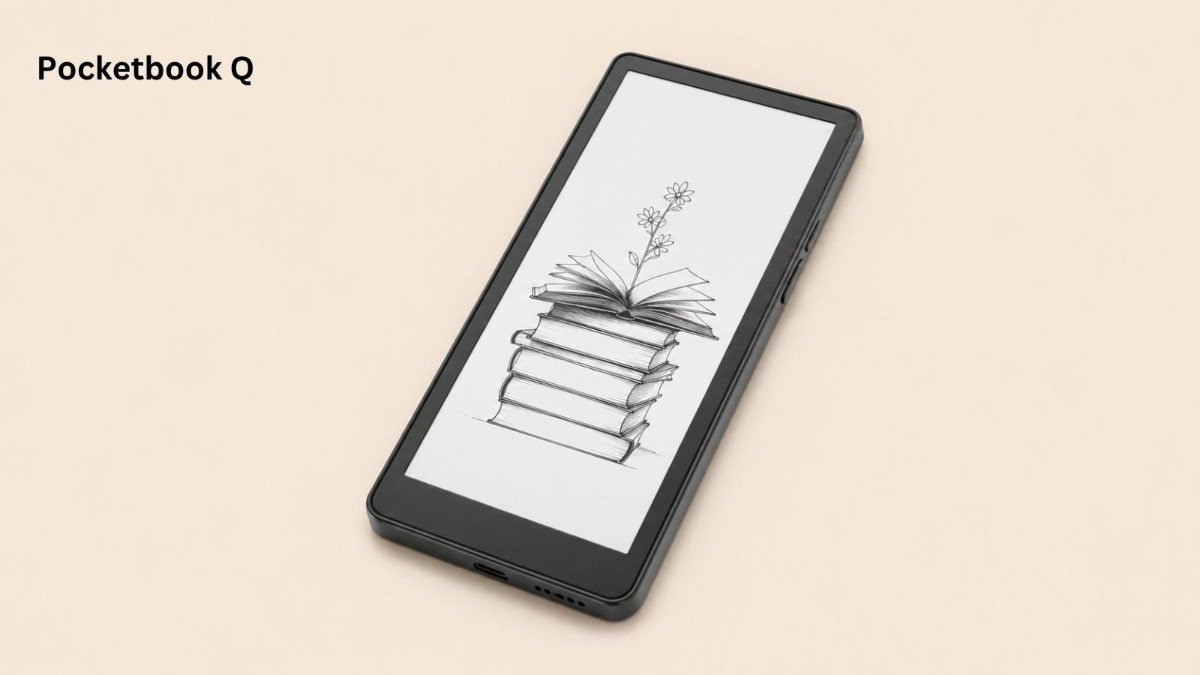
Pocketbook Q: Are Phone-Sized E-Readers the Future of Reading?
E-readers have long been popular in 6- to 7-inch or larger formats. That size works well for most books and documents, but a different approach is gaining attention: phone-sized E Ink readers. Devices such as the Boox Palma, InkPalm models, and other compact readers have drawn interest to this form factor.
Pocketbook is now entering the space with the Pocketbook Q. Its smartphone-like body and 5.84-inch E Ink display stand out as key features. The central question is whether these smaller readers offer real value, or whether a smartphone already provides a screen of similar size that many people already carry. The category continues to expand with options from Boox, Viwoods, Xteink, and now Pocketbook.
What Is the Pocketbook Q?
The Pocketbook Q is a compact e-reader designed to match the approximate size and proportions of a modern smartphone. Unlike traditional Kindle or Kobo devices that favour a wider, book-like shape, it prioritizes a tall, narrow body that fits more easily in a pocket. Its primary purpose is portable, distraction-free reading.
According to Pocketbook, it is an exceptionally compact smartphone-sized e-reader focused on books and related content rather than general computing or apps.
Pocketbook Q Specifications at a Glance
| Feature | Pocketbook Q |
| Display | 5.84-inch E Ink Carta 1300 |
| Resolution | 788 × 1,576 |
| Pixel Density | 300 DPI |
| Weight | Around 130g |
| Dimensions | 154 × 75.8 × 6.5 mm |
| RAM | 1GB |
| Storage | 32GB |
| Battery | 1,550mAh |
| OS | Pocketbook OS / Linux-based |
| Front Light | SMART light |
| Connectivity | Wi-Fi + Bluetooth |
| USB | USB-C |
| Water Resistance | IPX4 |
| Screen | Touchscreen |
These details come from current reporting on the device. Pricing, exact availability, and regional variations should be checked on the official Pocketbook site, as launch information can change.
Why Is Pocketbook Making a Phone-Sized E-Reader?
Portability
The design aims to slip into a pocket more readily than bulkier traditional readers. Its lower weight and slim profile support one-handed use during commutes or short breaks.
Distraction-Free Reading
Unlike a smartphone, it avoids social media notifications, constant messages, and unrelated apps. The experience stays cantered on reading.
E Ink Instead of a Smartphone Screen
E Ink is not meant to replace a smartphone display. It is built for a paper-like reading experience that many people find more comfortable for extended text.
One-Handed Reading
The tall, narrow shape can make novels and other text-heavy content practical to hold and turn pages with a single hand, especially when physical side buttons are present.
The Rise of Phone-Sized E-Readers
Compact readers are not an entirely new idea, but the phone-shaped E Ink form factor has received more mainstream attention in recent years. The Boox Palma series, with its original 6.13-inch E Ink display and Android software, showed how a phone-like reader could also support apps. Other devices have pushed portability further.
Current examples in the category include the Boox Palma, Ink Palm models, VI woods Ai Paper Reader, Xteink X4/X4 Pro, and the Pocketbook Q. These phone-sized E Ink readers share a focus on reducing bulk while keeping dedicated reading hardware.
What’s the General Opinion About “Phone”-Sized Readers?
Community discussions, including those on Reddit and similar forums, show mixed but thoughtful views. Some readers appreciate the easy one-handed hold, light weight, strong portability for commuting, and comfort during short sessions. They often note that the size can feel more natural than larger devices for casual reading. Others question the need for a separate device when a smartphone already offers a screen of comparable dimensions.
Criticisms commonly include the smaller reading area (which can make PDFs or comics less ideal), the cost of carrying another gadget, and, on some Android models, higher prices. Phone-like size does not automatically deliver phone-like features. These are user opinions rather than universal facts; preferences depend on individual habits.
Pocketbook Q vs Traditional E-Readers
The comparison centres on form factor rather than declaring one superior.
Pocketbook Q
- Higher portability
- Smartphone-like shape
- Easier one-handed use
- Suited to novels and text
- Smaller display area
Traditional 6–7 Inch E-Readers
- Larger reading surface
- Better suited to PDFs and illustrated material
- Often more comfortable for longer or complex layouts
- Less pocket-friendly
The better choice depends on what and how a person reads.
Pocketbook Q vs Boox Palma
| Feature | Pocketbook Q | Boox Palma |
| Form factor | Phone-sized | Phone-sized |
| Display | 5.84-inch | 6.13-inch |
| E Ink | Carta 1300 | Carta technology |
| OS | Pocketbook OS/Linux-based | Android |
| Apps | More limited | Android apps |
| Main focus | Dedicated reading | Reading + apps |
| Portability | Very high | Very high |
Boox Palma’s Android system and app access give it flexibility for users who want more than pure reading. Pocketbook Q emphasizes simplicity and a dedicated experience. Neither is universally better; the choice hinges on whether a reader prioritizes focus or software versatility.
Pocketbook Q vs Ink Palm and Other Small E-Readers
Ink Palm-style devices helped show demand for very compact E Ink hardware, with portability as the main draw. Software quality, availability, language support, and ecosystem strength can differ across brands. Pocketbook may appeal more to readers already familiar with its interface and format support. Claims about superiority should stay limited to verified differences in size, OS, and stated focus.
What Can You Read on a Phone-Sized E-Reader?
Best for
- Novels
- EPUB books
- Text-heavy titles
- Articles
- Simple documents
- Audiobooks (where supported)
Less Ideal For
- Large PDFs
- Textbooks
- Technical documents
- Magazines
- Comics or manga
- Large-format files
Advantages of Phone-Sized E-Readers
- Extremely portable
- Easy one-handed reading
- Distraction-free experience
- E Ink reading experience
- Fits easily in a small bag or pocket
- Dedicated device for reading
Disadvantages of Phone-Sized E-Readers
- Smaller reading area that limits some content
- A smartphone already offers a similar physical size, so a clear reason for a second device is needed
- Limited apps on non-Android models such as the Pocketbook Q
- Not ideal for every content type (comics, complex PDFs, magazines often benefit from larger screens)
- An extra device to carry alongside a phone
Is a Phone-Sized E-Reader Better Than Reading on a Phone?
For some readers, yes—but not because the screen is larger. A smartphone provides apps, internet access, notifications, colour, and multifunctionality. An E Ink reader supplies a paper-like display, a dedicated environment with fewer interruptions, typically long battery life, and a stronger focus on books. The better option depends on reading habits: someone seeking focused sessions may prefer the dedicated device, while others remain content with their phone.
Best Phone Size E-Reader: What Should You Look For?
Useful factors include screen size and resolution (PPI), weight, front light quality, battery life, operating system, app support, storage, format compatibility, presence of page-turn buttons, water resistance rating, and overall price and availability. Matching these to personal needs matters more than any single “best” label.
Best Phone-Sized E-Readers to Consider
Pocketbook Q
Best for dedicated reading and high portability in a simple package.
Boox Palma
Best for users who want Android apps alongside reading.
Ink Palm
Best for ultra-compact reading when maximum small size is the priority.
Xteink X4 Pro
Best for a very small, lightweight setup. Reviews note its particularly compact 4.3-inch size, though software limitations should be considered.
These are suggestions by use case rather than absolute rankings.
Are Phone-Shaped E-Readers Just a Trend?
They appear to be more than a short-lived novelty, yet the category remains niche. Multiple manufacturers now offer compact E Ink devices, responding to clear demand for portability. Traditional 6- to 7-inch readers stay more versatile for many tasks. The long-term outlook will depend on pricing, software quality, battery performance, and broader adoption. Pocketbook’s entry signals that an established e-reader brand sees lasting value in the form factor.
Who Should Buy a Phone-Sized E-Reader?
Good choice for
Daily novel readers, commuters, travellers, people who read before bed, minimalists, those who find standard e-readers bulky, and readers seeking fewer smartphone distractions.
Probably not for
Students handling large PDFs, comic or manga readers, heavy note-takers, users who want extensive Android apps, or people already satisfied reading on their phone.
Final Verdict — Is the Pocketbook Q Worth Watching?
The Pocketbook Q is not intended to replace every e-reader. Its goal is different: to make dedicated E Ink reading small enough to carry almost anywhere. Phone-sized readers deliver genuine advantages in portability and focus, but they are not ideal for every reader or every type of content. The Q adds a non-Android option that prioritizes simplicity. Android-based devices such as the Boox Palma remain appealing for those who want apps and flexibility.
Larger traditional e-readers continue to serve better for documents that benefit from more screen space. The real question is not whether a phone-sized reader is better in absolute terms, but whether an individual’s reading habits would benefit from a smaller, dedicated device.
Read more : Creating Your First AI Agent Without Writing a Single Line of Code
Frequently Asked Questions About Phone-Sized E-Readers
What is a phone-sized e-reader?
A compact dedicated reading device with a tall, narrow body similar to a smartphone. It generally uses an E Ink display rather than a conventional phone screen.
Is the Pocketbook Q a phone?
No. It has a smartphone-like shape but functions as an e-reader. Pocketbook describes it as a smartphone-sized e-reader.
What size is the Pocketbook Q?
It has a 5.84-inch E Ink Carta 1300 display with 300 DPI resolution.
Does Pocketbook Q run Android?
No. It uses Pocketbook’s Linux-based software, keeping the focus on dedicated reading rather than broad app support.
Is Boox Palma a phone?
No. It is a mobile E Ink device with a phone-like form factor. Its Android system allows apps, but it is not a conventional cellular smartphone.
Are phone-sized e-readers good for reading books?
They can work well for novels and text-heavy books because they are lightweight and easy to hold. Larger e-readers are often more comfortable for PDFs, comics, and large-format documents.
What are the benefits of a phone-sized E Ink reader?
Portability, one-handed use, a distraction-free environment, and the E Ink reading experience.
Is a phone-sized e-reader better than a smartphone?
It depends on the user. A smartphone offers apps, colour, and versatility; a dedicated E Ink reader focuses on reading and can reduce digital interruptions.
What is the best phone-sized e-reader?
There is no single best model for everyone. The Pocketbook Q may suit those seeking a dedicated device, while the Boox Palma may better serve users who want Android apps and greater flexibility.
Are phone-shaped e-readers becoming popular?
The category is receiving more attention as manufacturers release compact E Ink devices, but these readers remain a niche compared with traditional 6- to 7-inch models.
1 thought on “Pocketbook Q and the Rise of Phone-Sized E-Readers”